Archive
The disappeared story of the Jewish Labor Bund – posted 6/27/2026
Winston Churchill once wrote, “History will be kind to me because I intend to write it”. Who writes history often determines what is remembered about historical events. Some history gets excised because the victors are the writers and the voices of the defeated are silenced or ignored. Such is the case of the Jewish Bund, a political party that came out of the Tsarist empire.
The story of the Bund has never been well told until the writer and artist Molly Crabapple wrote Here Where We Live Is Our Country, a new book that encompasses history, politics, biography and memoir. Crabapple comes from a Jewish family of artists and she drew inspiration from her great grandfather Sam Rothbort, who also was an artist and a Bund activist.
The Bund fought for the overthrow of the tsar and for democratic socialism. They were internationalists and they recognized the need to organize the whole working class but their focus was organization of the Jewish, Yiddish-speaking proletariat. They participated in the 1905 and 1917 Russian revolutions.
In the early 20th century, the Bund was the most popular socialist movement in Russia. They were part of the Russian Social Democratic Labor Party but they split from that party in 1903. The Bund went into further opposition from Lenin and the Bolsheviks after 1917 and they were effectively banished from the Soviet Union in 1921. The Bund reconstituted in Poland.
From the early 20th century to the Warsaw Ghetto Uprising in 1943, the Bund played a prominent role in Eastern Europe fighting for their liberation both as Jews and as socialists. Crabapple recreates that historical era and shows the Bund competing against other political currents, especially the Zionists. This was long before there was a Jewish state. She shows the conflict between those who favored fighting for democratic socialism in home countries and those who favored building a Jewish ethnostate. The Bund fiercely criticized Zionism. Crabapple quotes the Bund leader, Henryk Erlich, who in 1938 wrote:
“If a Jewish state should arise in Palestine, its spiritual climate will be eternal fear of the external enemy (Arabs); eternal struggle for every bit of ground with the internal enemy (Arabs)…Is this a climate in which freedom, democracy and progress can grow? Indeed is it not the climate in which reaction and chauvinism ordinarily flourish.”
In the aftermath of the Gaza genocide and the Israeli state’s criminal behavior in the West Bank, many Jews and others, horrified by the moral collapse of Zionism, can appreciate Erlich’s prophetic words. The Bund may have been later destroyed by the Nazis but it anticipated the trajectory of Zionism.
Crabapple’s book is important in combatting the stereotype that Jews meekly marched into the gas chambers. The Bund fought back. They formed defense squads against pogroms. They organized a general strike in Poland against the murder of Jews and against fascism. They consistently fought antisemitism which was rampant in Eastern Europe. Around 200,000 Jews were murdered in the pogroms between 1918-1921 alone. They worked collaboratively with the Polish Socialist Party to fight for Polish liberation.
The Bund played a critical role in the Warsaw Ghetto Uprising against the Nazis. They co-founded the Jewish Combat Organization. The Warsaw Ghetto Uprising was one of the first and largest acts of armed resistance against the Nazi persecution of the Jews. In April 1943 when the Nazis sought to deport the remaining Jewish population to certain death, they were met by bullets, grenades and mines. Even with the ghetto reduced to ashes, they fought relentlessly. The Jewish fighters held out for weeks.
One of my favorite parts of Crabapple’s book is her vignettes of the lives of the Bund leaders. I would mention her stories about the life of Bernard Goldstein. Goldstein was head of the Bund’s self-defense militia in Warsaw. She describes him:
“Born in an impoverished shtetl in Eastern Europe, Bernard joined the party at age 13. By sixteen, he had already survived one prison term; for a keepsake a guard left a saber scar across his face. A quiet bruiser who spoke in a mangled mixture of three languages, Bernard spent the next decade escaping jails and organizing unions.”
Living an entirely underground existence, Bernard organized the opposition to the Nazis around the time of the Warsaw Ghetto Uprising. He desperately sought arms while evading capture. The Bund dug tunnels through the sewer system of Warsaw and Bernard expertly navigated escape routes. He somehow survived unbelievable carnage and managed to get to New York City after the war. He wrote two volumes and died in 1959.
Reading the story of the Bund, it is hard not to compare that time to our present. While it was going on, the United States ignored the fact that Jews were the victims of a campaign of mass extermination. Now our government again ignores the cries of asylum seekers and refugees blaming those trying to escape persecution.
A big part of the reason we don’t know the Bund story is because the Nazis killed so many. There were relatively few Jewish survivors. Importantly, Molly Crabapple recognizes that the Bund did not fail. They were defeated by an overwhelming nihilistic force. Nothing erases their honorable example.
Becoming a concentration camp society – posted 6/20/2026
America is becoming a concentration camp society. Although we incarcerate tons of people there is a reluctance to own that conception. It is not the way people want to think about America, especially in this 250th anniversary year.
U.S. Immigration and Customs Enforcement is currently holding around 60,000 detainees. About 70% of those ICE detainees have no criminal record. Unlawful presence in the United States is not a crime. It is a civil infraction that can lead to deportation.
The detainees are concentrated in Texas, Louisiana, California, Florida and Georgia. ICE has made if difficult to track the location of those being held. The agency transfers detainees frequently, often sending them thousands of miles around the country making it hard for families and attorneys to locate loved ones or clients.
What has been most shocking and distressing is the problem of detention and deportation of immigrants who receive no due process. Andrea Pitzer, an expert on concentration camps, has written that what separates concentration camps from mere detention or prison facilities is the end-run around any legal process. The Trump regime has tried to remove immigration from judicial process so they can do whatever they want.
Detention is based on identity, not what the individual has done. The Trump regime is attempting a purge of people they designate as foreigners or outsiders. I don’t think it is far off to see fear of the great replacement behind the ICE effort. They are hoping the public will simply ignore the mass caging and pretend it is not happening like the German masses did in the 1930’s.
The regime has explicitly re-branded immigration judges as “deportation judges”. This follows on the heels of their removing more than 100 sitting immigration judges. Any sense of court justice has been replaced by a canned ,pre-ordained result.
Beyond the fact that immigrants are being held without due process, I wanted to highlight the difficulty of getting accurate information about the concentration camps where ICE is holding people. The ability to get such information has been consistently blocked by the Trump regime.
Reporters are not being allowed into ICE concentration camps. While they can request entry, access is extremely difficult and highly restricted. You might ask: why?
Members of Congress are not let into ICE facilities even though by federal law they have an explicit right to enter and conduct unannounced overnight visits. ICE has labeled such visits as “disruptive”. Congress people have sued in federal court to allow their access and they have won temporary restraining orders against the regime’s blocking tactics. Some Congress people have gained entry but the regime continues to block access as much as it can.
There are over 200 ICE detention facilities around the country and because of funding they have been expanding but the information lockdown remains. Without reporting, how do we learn about the actual conditions of the detainees? One Russian family described its four month ordeal at Dilley Immigration Processing Center in Texas in an NBC News interview:
“Worms in the food. Guards shouting orders and snatching toys from small hands. Restless nights under fluorescent lights that never fully go dark. Hours in line for a single pill. “We left a tyranny and came to another land of tyranny”, Nikita said in Russian. “Even in Russia, they don’t treat children like this.”
So many questions remain. What is detainee access to health care? decent food? basic hygiene? Are detainees beaten, abused or sexually assaulted by guards? The ACLU has reported many problems.
The fact that ICE generally refuses media and Congressional access is a terrible sign. We are supposed to have a free press that can report openly and transparently on our institutions. As noted, what is going on is similar to the early German Nazi years before concentration camps transformed into death camps. That transformation took years. There wasn’t reporting then either.
Democracies cross over into dictatorships when fundamental First Amendment rights are denied and concentration camps become off limits to the press. I wrote we are becoming a concentration camp society, not that it is a done deal. But as Andrea Pitzer has written:
“The longer the detentions and the more secret or hidden the facilities, the worse the possibilities for what can happen.”
Opponents to the creation of concentration camps in America must fight to have ICE facilities shut down completely. That should be a litmus test position for any Democratic presidential candidate running in 2028. Concentration camps are incompatible with democracy.
John Echohawk’s mission – posted 6/13/2026
In 2026 America, heroes are in short supply. A sociopathic President, a corrupt Supreme Court majority, and a supine Congress offer nothing to cheer about. Looking for someone to admire, there is a need to look outside conventional or Establishment places.
When I was traveling out West earlier this month, along with others from my Nation Native American Voices trip, I had the opportunity to meet an unsung hero, John Echohawk, a member of the Pawnee Nation. Echohawk is a lawyer who has played a major role in resurrecting federal Indian law.
Meeting with him was like exposure to living history.
He described his experience as the first Native American graduate of the University of New Mexico Law School. Through the LBJ War on Poverty and the Office of Economic Opportunity, he was able to secure a full scholarship to go to law school. His law school was one of the first to put together a course in federal Indian law. There was no roadmap in 1970.
Dispossession of land, opposition to water rights, and objection to sacred cultural practices was the Native American reality. Termination of treaty rights and efforts toward assimilation were the norm. Echohawk said it was a revelation to learn about tribal sovereignty rights. In the early 1970’s even tribal leaders didn’t know about treaty rights.
Echohawk learned that there was a complex body of law between hundreds of Native American tribes and the U.S. government. He realized that it didn’t matter what the law said unless there were lawyers to enforce treaty provisions.
After law school in 1970, he co-founded the Native American Rights Fund (NARF) which 56 years later remains the most powerful voice in the country to protect Native American rights, resources and lifeways. Echohawk said he learned from the civil rights movement of that era and he wanted NARF to do for Native Americans what the NAACP Legal Defense Fund had done for African Americans.
NARF developed five priorities:
- Preserve Tribal existence
- Protect Tribal natural resources
- Promote Native American human rights
- Hold governments accountable to Native Americans
- Develop Indian law and educate the public about Indian rights, laws and issues
They have filed and won hundreds of cases involving tribal sovereignty, tribal rights and natural resource protection. They have provided legal advice and assistance to Tribes on a wide range of matters. Echohawk has been the Executive Director of NARF since 1977.
Concerned about the erosion of tribal sovereignty by U.S. Supreme Court justices who were unfamiliar with federal Indian law, he helped set up a Tribal Supreme Court Project. That project has significantly improved outcomes for Tribes with a 70% win rate in SCOTUS cases over the last decade. Before the Project’s creation, Tribes were experiencing an 80% loss rate.
Of the successful litigation, I would mention several cases. Throughout the 1960’s and 1970’s, “Fish Wars” developed as Washington state attempted to enforce regulations that prohibited Native Americans in northwest Washington from fishing at their traditional, off-reservation locations.
In what came to be known as the Boldt decision, Federal Court Judge George Boldt interpreted the 1850’s Stevens Treaties to mean that Tribes were legally entitled to 50% of the harvestable catch. Tribes had ceded millions of acres of land to the government in exchange for guaranteed preservation of their traditional fishing practices. This enormous victory was ultimately affirmed by both the 9th Circuit and the U.S. Supreme Court. Echohawk said:
“Everybody came to understand that these treaties were not ancient history that they were still the supreme law of the land.”
When the state of Maine tried to take control of tribal land and affairs, NARF, on behalf of the Passamaquoddy and the Penobscot Nation pointed to the Intercourse Act of 1790 which said there can be no transactions with tribes over land unless they are approved by the federal government. NARF sued and won in both the federal and circuit court. President Carter called the parties together and the Passamaquoddy and the Penobscot reached a settlement. They got back a huge part of their land, money and federal recognition.
More recently, in Haaland v Brackeen, a case challenging the constitutionality of the Indian Child Welfare Act, NARF coordinated the largest united Indian County amicus brief with 497 Tribes and 62 Tribal organizations. The Supreme Court by a 7-2 vote upheld the law’s constitutionality, a significant victory for tribal sovereignty.
While Echohawk is modest and maintains focus on the broader Native community, not himself, in 2023 the American Bar Association awarded him the Thurgood Marshall Award, recognizing his lifelong commitment to civil liberties and human rights.
NARF now has 26 lawyers and 3 offices. Echohawk and NARF remain fully engaged in the struggle. Echohawk exemplifies the difference one person can make.
Sitting Bull and the 150th anniversary of Little Big Horn – posted 6/6/2026
2026 is a year of commemorations. While it is America’s 250 and Concord New Hampshire’s 300, June 25 is also the 150th anniversary of the battle of Little Big Horn. Little Big Horn has been mostly known because of the deaths of Gen. George Custer and his troops at the hands of the Sioux and Cheyenne Indians but there is so much more to the story.
I recently had the opportunity to visit North Dakota, South Dakota and Colorado and hear about this event from a Native American perspective. It is not the perspective I learned in school. Truthfully Native American history is a vast panorama but the stories have been largely erased. From my personal experience, the history is not taught in either school or college.
In the 1860’s and 1870’s, there were over 100 distinct armed engagements and thousands of smaller documented actions between Native Americans and the U.S. government across the American West. These conflicts exploded because of the massive influx of settlers combined with the almost constant breaking of treaties by the government.
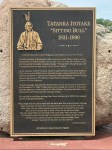
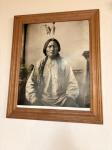
A central character in the Little Big Horn story is Tatanka Iyotake or as he was better known, Sitting Bull. A Lakota Sioux, Sitting Bull was born in 1831. He was not engaged in any fight with settlers until his experience in the early 1860’s with Gen. Henry Sibley and his ruthless campaign against Native Americans. Sibley didn’t distinguish between innocents and warriors. His troops killed women and children. That experience contributed to Sitting Bull’s recalcitrance,
After the Civil War, President Ulysses Grant advocated a policy of peace with the Native Americans. He wanted to abide by the terms of the second Fort Laramie treaty which gave the Lakota Sioux much of Montana, Wyoming and South Dakota. However, prospectors and miners discovered gold and the lure of getting rich drew many white people to the region. Gen. Custer was actually the person who confirmed the presence of gold and a gold rush ensued. He had led a military reconnaissance expedition into the Black Hills in 1874.
Mining interests placed great pressure on President Grant to allow search for gold in a region considered a sacred hunting ground by both the Sioux and the Cheyenne. Grant caved to the pressure. Even though this was entirely contrary to treaty provisions and promises, the federal government issued an order requiring all Indians to move onto reservations by January 31, 1876 or be considered hostile. Grant sent troops to back up this order.
Sitting Bull would not go to the reservation. He had a vision in the summer of 1876 of a great victory over white soldiers. That vision was fulfilled. In June 1876, federal troops began a multi-pronged attack on Indians not on a reservation. In a reckless mission, Gen. Custer did not wait for other forces under Gen. Crook and Gen. Terry. Custer led 200 men in an attack on Sitting Bull’s camp on Montana’s Little Big Horn River.
Sitting Bull and Crazy Horse and hundreds of Lakota Sioux and Cheyenne warriors defeated Custer and killed him and his troops. The defeat shocked America. Even though Custer had led an attack on a peaceful Sioux village, he became a hero in death and was remembered as the victim of a massacre.
Custer’s defeat provoked a massive federal military response. Sitting Bull had to retreat to Canada. These words of Sitting Bull mark his grave site:
“What treaty have the Lakota made with the white man that we have broken? Not one. What treaty have the white men ever made with us that they have ever kept? Not one. When I was a boy the Lakota owned the world; the sun rose and set on their land; they sent ten thousand men to battle. Where are the warriors today? Who slew them? Where are our lands? Who owns them? What law have I broken? Is it wrong for me to love my own? Is it wicked for me because my skin is red? Because I am Lakota; because I was born where my father lived; because I would die for my people and my country?”
While Sitting Bull was a prominent warrior, he was widely respected in the Native American world both for his fortitude of spirit and his spirituality. He never signed any treaties with the U.S. government. After Little Big Horn, Sitting Bull spent four years in Canada. He was on shaky ground with the government. When he returned to the U.S. he was first treated as a military prisoner but the government then relented. For a time, he joined Bullfalo Bill Cody’s Wild West show and toured the U.S.
Tribal police killed Sitting Bull on December 15, 1890. They had a mission to bring Sitting Bull into the Standing Rock Agency to quell the Ghost Dance, a ceremonial dance believed to bring back an old way of life.
As we consider the 150th anniversary of Little Big Horn, in an era where DEI is condemned by the federal government, there is a gross misunderstanding of the Native American situation. Native American tribes remain sovereign nations. It is a mistake to see Native Americans as simply a racial minority. The battle over DEI doesn’t apply to Native Americans. Under the Constitution, the government’s treaties with Native American tribes remain the supreme law of the land.
The story of Little Big Horn deserves reconsideration. Sitting Bull was the true hero of the story trying to protect and enforce legitimate treaty rights that were being broken. The loss of land meant the end of a way of life that depended on that land. As has been said, Custer died for our sins.
Scenes from the Nation Native American Voices trip – posted 6/2/2026
-

- i m g 4 9 8 4
-

- i m g 4 9 8 7
-

- i m g 4 9 9 9
-
- i m g 5 0 2 1
-
- i m g 5 0 2 8
-

- i m g 5 0 2 9
-

- i m g 5 0 3 0
-
- i m g 5 0 4 2
-

- i m g 5 0 4 4
-

- i m g 5 0 5 0
-
- i m g 5 0 6 9
-

- i m g 5 0 8 4
-

- i m g 5 0 9 6
-
- i m g 5 1 0 1
-

- i m g 5 1 0 4
-
- i m g 5 1 2 8
-

- i m g 5 1 6 6

